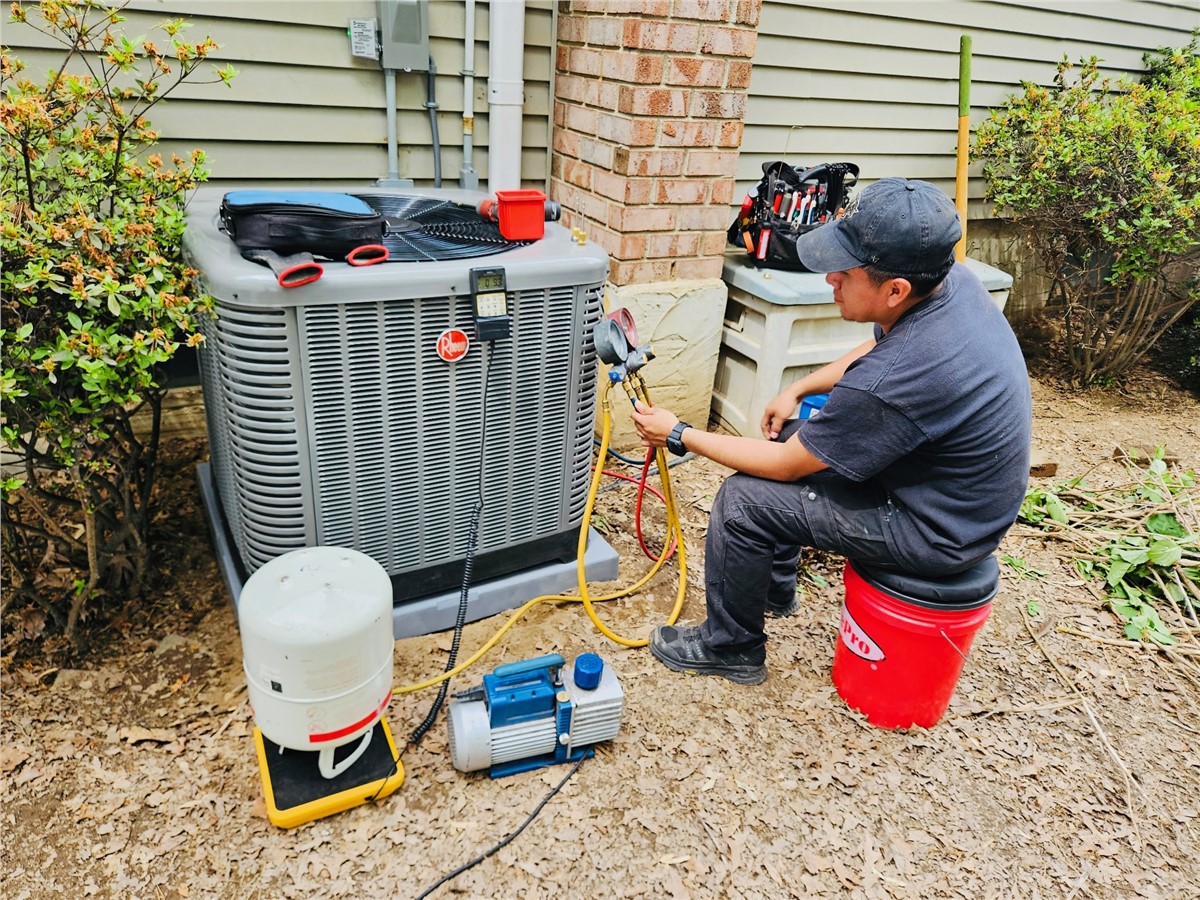
Air conditioners rarely fail without warning.
In many cases, homeowners begin noticing changes in comfort, reliability, operating costs, or system performance months—or even years—before their air conditioner stops working completely.
The challenge is knowing which problems are normal repair issues and which may indicate that an air conditioner is approaching the end of its useful life.
For Long Island homeowners, AC replacement is often worth evaluating when an older system begins showing multiple signs of declining performance, such as frequent repairs, rising electric bills, uneven cooling, refrigerant problems, or poor humidity control.
Quick Answer: What Are the Signs You Need a New AC System?
The most common signs that an air conditioner may need replacement include:
- Your AC is more than 12–15 years old
- Your cooling bills are increasing
- Repairs are becoming more frequent
- Your home no longer cools evenly
- Your AC runs almost constantly
- Indoor humidity remains high
- Refrigerant leaks keep occurring
- Your system still uses R-22 refrigerant
- Your AC has become unusually noisy
- The compressor has failed
One warning sign does not automatically mean you need a new air conditioner. Replacement becomes more important to consider when several problems occur together—especially on an older system.
1. Your AC Is More Than 12–15 Years Old
Air conditioner age is one of the first factors to consider when evaluating replacement.
Many central air conditioning systems can provide approximately 12–20 years of service, depending on factors such as:
- Installation quality
- Maintenance history
- Usage
- Equipment condition
- Environmental exposure
Reaching 12 or 15 years old does not mean an air conditioner suddenly needs to be replaced. However, as equipment gets older, the likelihood of component wear, declining efficiency, corrosion, refrigerant problems, and future repairs generally becomes more important to consider.
When Does Age Become More Concerning?
An older system deserves closer evaluation when its age is accompanied by problems such as:
- Recurring breakdowns or repairs
- Increasing cooling costs
- Poor indoor comfort
- Refrigerant leaks
- Corrosion
- Major component failure
A well-performing older AC system may still have useful life remaining. A similarly aged system experiencing several problems may be approaching the point where replacement makes more sense than continued repairs.
2. Your Energy Bills Keep Increasing
A rising electric bill does not automatically mean your air conditioner is failing.
Weather conditions, thermostat settings, electricity rates, occupancy, and other household factors can all affect energy use.
However, if your summer cooling costs continue increasing while your usage and comfort habits remain relatively similar, declining AC performance may be one factor worth investigating.
As equipment ages, problems such as component wear, dirty coils, airflow issues, or deteriorating system performance can cause the air conditioner to work harder to maintain the same indoor temperature.
Warning Signs to Watch For
You may notice:
- Longer cooling cycles
- Higher summer electricity usage
- Increasing operating costs
- Less cooling despite longer runtime
A professional evaluation can help determine whether the problem is the AC equipment itself or another issue, such as duct leakage, insulation deficiencies, or airflow restrictions.
3. You Are Calling for AC Repairs More Often
Every air conditioner eventually needs service.
An isolated capacitor, contactor, thermostat, drain, or electrical problem does not necessarily mean the system is nearing replacement.
The more important warning sign is a pattern of increasingly frequent problems.
Examples may include:
- Multiple service calls within a few cooling seasons
- Repeated refrigerant repairs
- Fan or blower motor problems
- Recurring electrical failures
- Different components failing one after another
- Repair costs gradually increasing
One repair may simply be normal equipment wear.
Several repairs over a relatively short period, however, can indicate that the system is becoming less reliable overall.
Look at the Pattern, Not Just the Latest Repair
Homeowners sometimes focus only on the problem occurring today.
A better question is:
Has this air conditioner become noticeably less dependable over the last several years?
If the answer is yes, it may be worth beginning a conversation about replacement.
4. Your Home No Longer Cools Evenly
An air conditioner can technically be running while still failing to keep the home comfortable.
Signs may include:
- Certain rooms staying noticeably warmer
- Hot second-floor bedrooms
- Large temperature differences between rooms
- Constant thermostat adjustments
- Cooling that no longer feels as strong as it once did
Declining comfort can sometimes indicate aging AC equipment.
However, uneven temperatures can also result from:
- Duct leakage
- Poor airflow
- Improper duct sizing
- Insulation deficiencies
- Air sealing problems
- Improper equipment sizing
This is why comfort problems should be diagnosed before replacing equipment.
A new air conditioner will not necessarily correct a ductwork or airflow problem that was never addressed.
5. Your Air Conditioner Runs Almost Constantly
Air conditioners are designed to run in cycles, although longer operating periods can be normal during very hot or humid Long Island weather.
A potential warning sign is when the system seems to run nearly continuously even under more typical conditions.
Constant operation may be associated with:
- Reduced cooling capacity
- Refrigerant problems
- Airflow restrictions
- Aging equipment
- Improper equipment sizing
- Ductwork problems
Longer runtime also increases wear on system components.
If your AC rarely shuts off and your home still struggles to reach the thermostat setting, the system should be evaluated.
Whether replacement is appropriate depends on what is actually causing the problem.
6. Your Home Feels Too Humid
Air conditioning does more than lower indoor temperature. A properly operating system also helps remove moisture from the air.
That is especially important on Long Island, where summer humidity can make a home feel uncomfortable even when the thermostat appears to show the correct temperature.
Possible signs of poor humidity control include a home that feels:
- Sticky
- Damp
- Muggy
- Uncomfortable despite reaching the thermostat setting
Declining AC performance can contribute to humidity problems.
Humidity can also be affected by equipment sizing, airflow, duct conditions, and other factors.
Temperature consistency and humidity control are both important indicators of system performance.
If an AC system is struggling with both and there are no other diagnosable factors, replacement may deserve stronger consideration.
7. Your AC Has Recurring Refrigerant Leaks
A single refrigerant leak does not automatically mean an air conditioner needs to be replaced.
Some leaks can be located and repaired.
Recurring or major refrigerant problems become more significant, especially when the equipment is already older.
Refrigerant leaks can contribute to:
- Reduced cooling
- Longer operating times
- Higher energy use
- Compressor stress
- Repeated service calls
A major coil leak on an aging system may also create a more difficult financial decision because repairing one expensive component still leaves the homeowner with the remaining older equipment.
Repeated Refrigerant Problems Matter More Than One Isolated Issue
If refrigerant has been added or repaired several times, the bigger question becomes whether continuing to invest in the system makes long-term sense.
That decision should take into account:
- System age
- Location and severity of the leak
- Overall equipment condition
- Warranty coverage
- Repair cost
8. Your Air Conditioner Uses R-22 Refrigerant
Some older air conditioners still operate with R-22 refrigerant, often referred to as Freon.
R-22 production has been phased out, although existing R-22 systems can continue operating and may still be serviced when appropriate.
Using R-22 by itself does not mean an air conditioner must immediately be replaced.
The issue becomes more important when an older R-22 system develops a refrigerant-related problem or needs a major repair.
For example, system replacement may become more attractive when an aging R-22 system needs:
- A major refrigerant repair
- Significant refrigerant replacement
- Coil work
- Compressor work
- Repeated leak repairs
More recently, the manufacture of new R-410A equipment has also been phased out. Existing R-410A systems remain legal to repair, maintain, and charge, while the refrigerant supply is expected to change gradually through the ongoing phase-down process.
For homeowners with older refrigerant systems, the best decision depends on the condition and age of the equipment, the repair required, and the expected cost of continued ownership.
9. Your AC Has Become Excessively Noisy
Air conditioning systems naturally make noise while operating.
What homeowners should pay attention to is a new, unusual, or worsening sound.
Examples may include:
- Grinding
- Squealing
- Buzzing
- Banging
- Rattling
These sounds can be associated with issues involving motors, electrical components, fans, compressors, or loose mechanical parts.
Noise alone is not a reason to replace an entire air conditioning system. Many noisy components can be repaired.
However, increasing mechanical noise combined with advanced system age, declining comfort, frequent breakdowns, or major component wear can add to the case for replacement.
10. The Compressor Has Failed
A compressor failure is one of the most significant problems an air conditioning system can experience.
The compressor is a major component of the refrigeration system, and replacing one can involve substantial labor, refrigerant, and equipment costs.
That still does not mean every compressor failure requires complete AC replacement.
Repair May Still Make Sense When:
- The system is relatively young
- The compressor is covered by warranty
- The rest of the equipment is in strong condition
- The failure is isolated
Replacement Becomes More Important to Evaluate When:
- The system is already 12+ years old
- Other components are also aging
- Repairs have been occurring more frequently
- Comfort or efficiency has already declined
- Additional refrigerant or coil problems exist
On an aging air conditioner, a compressor failure is often one of the strongest signals that it is time to compare the cost and long-term value of repair versus replacement.
When Should You Replace Your AC?
There is no single age or repair cost that automatically means an air conditioner needs to be replaced.
Instead, look at the overall condition of the system.
An older air conditioner that is reliable, comfortable, and reasonably efficient may still have useful life remaining.
On the other hand, an aging system experiencing frequent repairs, rising operating costs, refrigerant problems, declining comfort, and major component failures may be approaching the point where replacement is the more practical long-term option.
The key is to evaluate the entire system—not just the latest problem.
Need Help Deciding Between AC Repair and Replacement?
If your Long Island air conditioner is showing several of these warning signs, a professional evaluation can help you understand the condition of your system and your available options.
At Varsity Home Services, we can help homeowners determine whether repairing an existing air conditioner or considering replacement makes the most sense for their home, equipment, and long-term comfort.
The goal isn't always to replace an old AC. It's to help you make the right decision for your home.
Varsity Home Services — Helping Homeowners Win Since 1962.
Subscribe to Varsity Home Services's Blog